





Genuine Organic Beauty
Freshwater pearls have a soft glow and tactile quality that imitation beads cannot fully reproduce. Natural surface character gives handmade designs warmth and individuality.

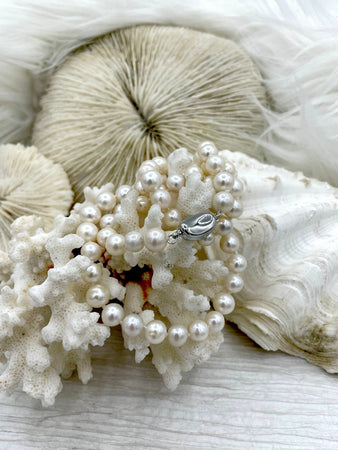
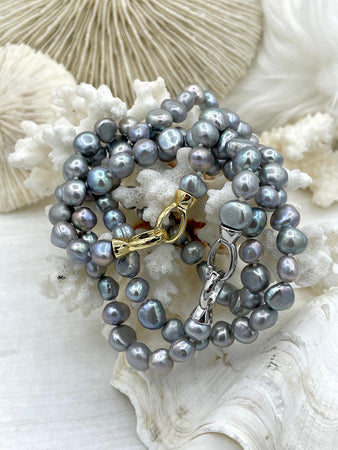
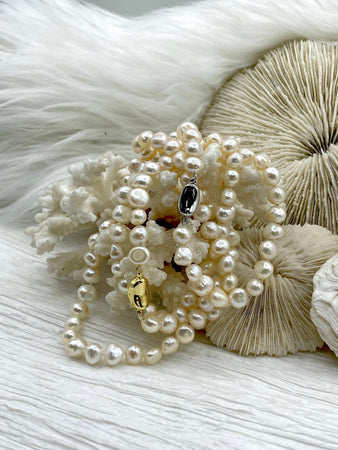
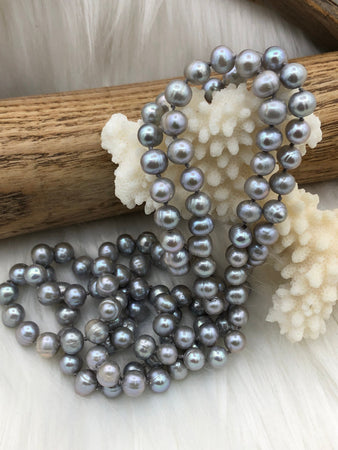
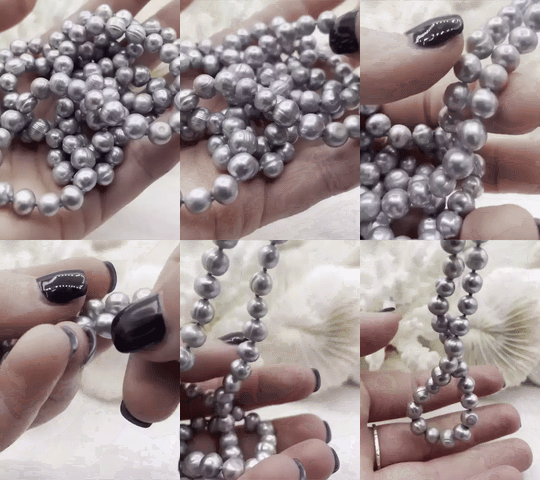
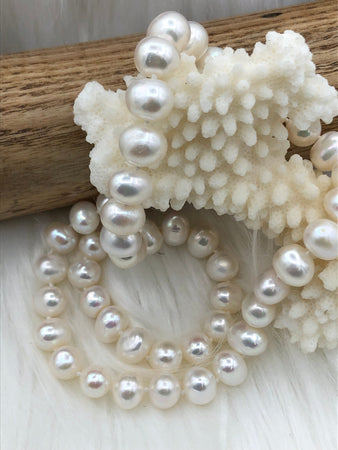
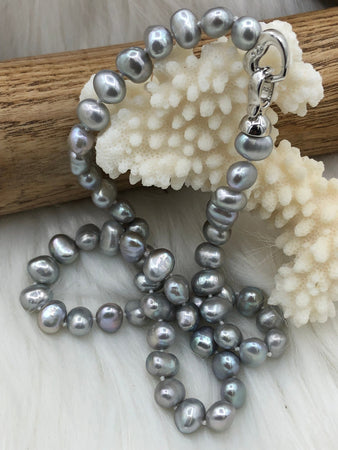
Discover genuine freshwater pearls selected for jewelry designers, makers and pearl lovers. The BlingByA collection includes hand-knotted pearl necklaces, pearl rosary chains and versatile freshwater pearl styles in classic white, sophisticated gray and other naturally inspired tones. Explore near-round, nugget and potato pearls in multiple sizes and grades for necklaces, bracelets, earrings, pendants, bridal jewelry and custom designs.
Freshwater pearls are loved for their luminous nacre, organic character and remarkable variety. Choose an elegant matched strand for a timeless necklace, a textured pearl style for a modern statement piece, or a wire-linked pearl chain that can be combined with charms, pendants and decorative clasps. Because pearls are natural materials, subtle differences in shape, surface and color make every piece distinctive.
Browse the collection below to compare the exact size, shape, grade, length, clasp finish and construction details of each product. BlingByA currently offers free shipping on qualifying orders over $150.
Freshwater pearls bring softness, light and natural character to handmade jewelry. They can look traditional in a carefully matched white necklace, contemporary in a gray nugget strand, romantic beside gold-toned findings, or artistic when irregular baroque forms become the focal point. This flexibility makes them valuable to professional designers, small jewelry businesses, bridal makers and beginners building their first pearl project.
The right pearls depend on more than a grade or size printed in a product title. Luster, surface quality, shape, color, matching, drilling, strand construction and clasp choice all influence the finished design. This collection guide explains what to compare while shopping and helps you select pearls that suit the style, scale and function of your project. For deeper education, visit the Freshwater Pearls Guide.

Freshwater pearls are genuine pearls produced by freshwater mollusks, most commonly mussels cultivated in lakes, ponds, rivers or managed freshwater environments. Most pearls available for modern jewelry making are cultured freshwater pearls. Cultured means that people carefully initiate the pearl-forming process inside the mollusk, which then deposits layers of nacre around the introduced tissue or material.
Nacre is the luminous substance that forms the pearl's visible surface. As light interacts with its layers, the pearl develops the glow and depth known as luster. Cultivation conditions, mollusk health, growth time and many natural variables affect each pearl, so differences in shape, tone and texture are expected rather than unusual.
Freshwater pearls have a soft glow and tactile quality that imitation beads cannot fully reproduce. Natural surface character gives handmade designs warmth and individuality.
Designers can choose from round, near-round, potato, rice, oval, button, coin, nugget and baroque forms, along with many sizes and color families.
Freshwater cultivation produces a broad selection, allowing makers to create accessible everyday jewelry as well as refined premium pieces.
Pearls coordinate with gold, silver, brass, base metals, gemstones, CZ charms, coin pendants and mixed-metal components.
Freshwater pearls can be used in classic strands, hand-knotted necklaces, rosary chains, charm-holder necklaces, earrings, bracelets, bridal accessories and statement pendants. Their visual range allows one material category to support many customer styles.
Luster describes the brightness, depth and sharpness of reflected light. A pearl with strong luster looks radiant and dimensional, while a pearl with weaker luster may appear flat or chalky. For many designs, strong luster creates more impact than perfect roundness. Review close-up photographs and look for clear, lively reflections rather than judging only by grade.
Freshwater pearls may show small pits, rings, ridges, wrinkles, dimples or spots. Fewer visible surface characteristics usually contribute to a higher commercial grade, but textured surfaces are not automatically undesirable. Nugget and baroque pearls are often chosen because organic texture adds personality.
Round pearls are traditionally associated with formal jewelry, but irregular shapes are central to many modern collections. Symmetry affects price and style, not whether a pearl is genuine. Decide whether you want a precise matched appearance, subtle natural variation or a sculptural focal element.
Matching refers to consistency in size, shape, color, luster and surface. Closely matched pearls create a polished result, while controlled variation creates an artistic effect. Matching is especially important for earrings because two pearls are viewed side by side.
Rich nacre supports luster and visual depth. Color should coordinate with the metals and components in the design, while drilling determines how pearls can be assembled. Verify whether pearls are center-drilled, top-drilled, temporarily strung, hand-knotted or wire-linked, and confirm that the hole size works with your thread, wire or findings.
Labels such as A, AA, AA+ and AAA can help compare pearls within one supplier's range, but there is no single universal grading standard used identically across the pearl industry. One seller's AAA pearls may not match another seller's definition. Consider the grade together with photographs, luster, surface, shape, matching and dimensions.
| Common label | General interpretation | Suitable uses |
|---|---|---|
| A | More visible surface characteristics, broader variation and moderate luster. | Organic jewelry, mixed-media pieces, casual designs and prototypes. |
| AA | Good luster with moderate surface character and practical matching. | Everyday necklaces, bracelets, earrings and small-business collections. |
| AA+ | Typically stronger luster, a cleaner appearance and improved matching. | Refined everyday jewelry, bridal accents, pearl rosary chain and gifts. |
| AAA | Generally high luster, cleaner surfaces and more careful matching. | Premium strands, formal jewelry, bridal designs and elevated collections. |
Use the grade as one comparison tool rather than the only measure of quality. A bright, beautifully textured nugget pearl may be more appropriate for a contemporary necklace than a smoother pearl that does not fit the concept.

Round pearls create the most traditional appearance and suit bridal necklaces, formal strands and classic earrings. Perfectly round freshwater pearls are less common and may cost more. Near-round pearls have slight asymmetry that is often difficult to notice when worn, offering a refined and versatile alternative.
Potato pearls are compact, softly rounded and slightly irregular. Nugget pearls have more obvious organic contours, while baroque pearls include highly individual shapes that may be elongated, ridged or sculptural. These shapes are ideal when natural texture should become part of the design.
Rice pearls are elongated and may have tapered ends, adding movement to earrings, fringe and delicate strands. Oval pearls are fuller and smoother, working well in drops, stations, bracelets and necklaces.
Button pearls have a lower, flattened profile suited to earrings, rings and compact settings. Coin pearls are flat and disc-like, with a broad reflective surface ideal for statement earrings, pendants and contemporary necklaces.
Pearl size is measured in millimeters across the widest point. Organic pearls are often listed as a range, such as 8–9 mm, because small variations occur naturally. Even one or two millimeters can make a visible difference across a necklace.
| Size | Appearance | Recommended uses |
|---|---|---|
| 2–4 mm | Fine and delicate. | Layering, spacers, petite earrings and detailed wirework. |
| 5–6 mm | Lightweight and versatile. | Everyday necklaces, bridal accents, rosary chains and earrings. |
| 7–8 mm | Classic and balanced. | Traditional strands, bracelets, bridal jewelry and statement earrings. |
| 9–10 mm | Bold and luxurious. | Feature necklaces, substantial bracelets and high-impact pieces. |
| 11 mm+ | Strong statement scale. | Baroque focal pieces, artistic necklaces and dramatic pendants. |
Larger pearls add weight and may require stronger thread, wire and clasps. Smaller pearls require finer needles and findings. Balance pearl size with necklace length, pendant scale, clasp dimensions and wearer comfort.

Freshwater pearls are available in white, cream, peach, blush, lavender, gray and other shades. Some tones occur naturally, while others may be enhanced through accepted treatments such as dyeing, bleaching or coating. Treatments are not automatically negative; they can make fashion colors more consistent and accessible. What matters is accurate product information.
White freshwater pearls are timeless and coordinate with silver, gold, brass, gemstones and bridal materials. Cream creates a warmer vintage effect. Peach and blush complement romantic palettes and warm metals. Lavender adds a distinctive cool pastel note, while gray feels sophisticated and contemporary.
Color can look different under daylight, warm indoor lighting and studio photography. For production work, order enough matching material at one time and compare the pearls beside the exact chain, clasp, charm or pendant finish.

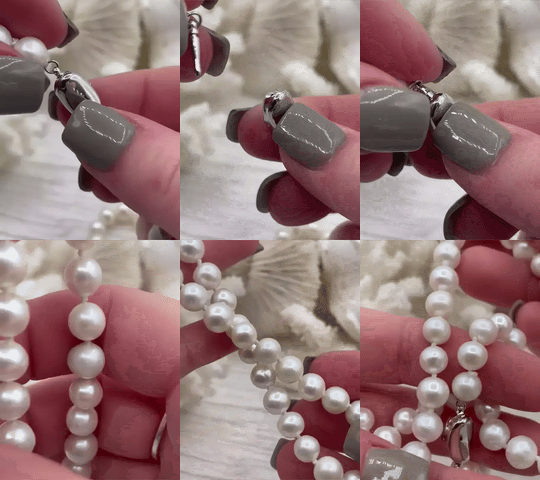
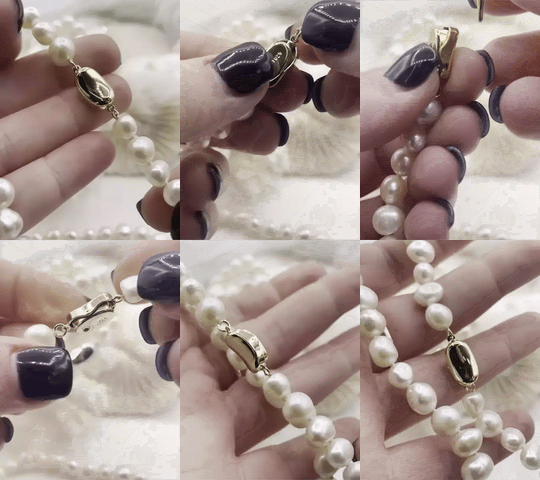
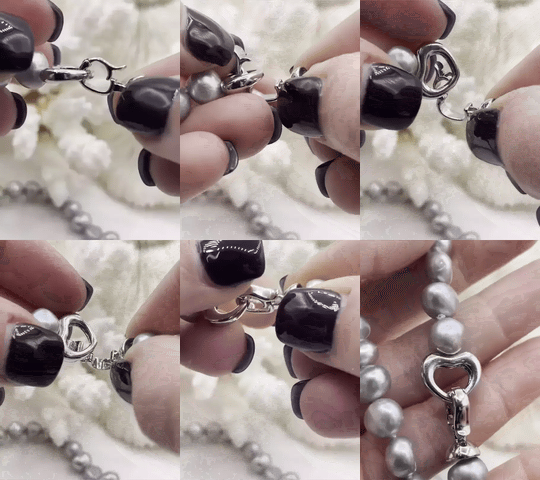
Knotting creates flexibility, separates pearls visually and can reduce loss if a strand breaks. A decorative clasp can also become part of the focal design. Explore BlingByA's hand-knotted necklace collection.
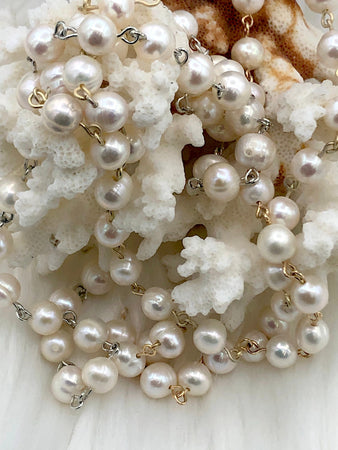
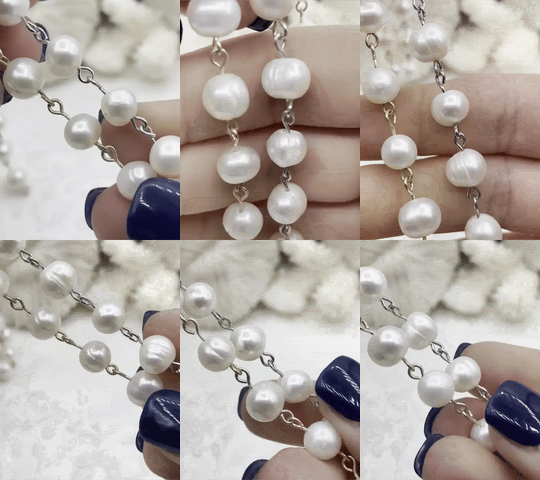
Wire-linked pearls create decorative chain for layered necklaces, bracelets, pendant designs and devotional jewelry. Browse the rosary beaded chain collection and read the complete rosary chain guide.
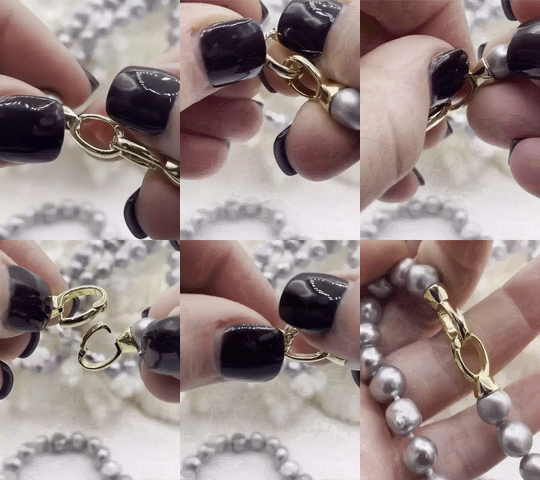
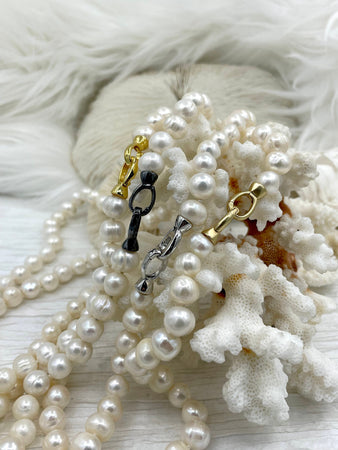
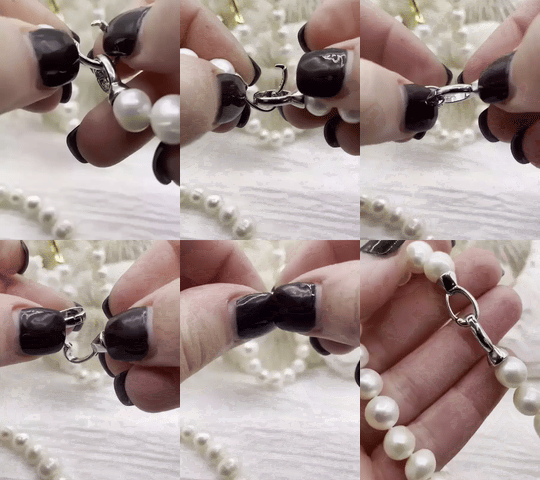
A removable spring gate clasp can transform a pearl strand into a charm-holder necklace. Add a coin pendant, CZ pavé charm or another focal piece, keeping the scale proportionate to the pearls.
White, cream and blush pearls work beautifully in bridal necklaces, earrings, bracelets, hair accessories and gifts. Near-round pearls support a traditional look, while baroque pearls create modern individuality.
Combining pearls with metal chain creates contrast. Gold and brass finishes often enhance cream, peach and blush pearls; silver-toned finishes pair naturally with white, lavender and gray. Browse pendants to complete the design.
Matched near-round pearls create classic earrings, while intentionally different baroque pearls make artistic pairs. For bracelets, use durable thread, wire and findings because they receive more impact and movement than necklaces.
Put pearl jewelry on after perfume, lotion, hairspray and cosmetics have dried. Remove it before swimming, showering, exercising, cleaning or sleeping. Chlorine, harsh detergents, chemical dips, steam and ultrasonic cleaning can damage or dull the surface.
After wearing pearls, wipe them gently with a soft, lint-free cloth. If more cleaning is needed, use a slightly damp cloth and allow the jewelry to dry fully. Store freshwater pearl jewelry separately in a soft pouch or lined compartment, and lay knotted strands flat.
Inspect the thread, knots, clasp and connecting rings regularly. If thread becomes stretched, frayed or discolored, arrange restringing before it breaks.

BlingByA serves jewelry makers looking for affordable, quality jewelry supplies and design-ready components. The collection includes hand-knotted necklaces, near-round, nugget and potato pearl styles, plus pearl rosary-chain options in multiple sizes and grades. Product listings provide details such as length, size, shape, clasp finish and construction.
The collection is supported by the BlingByA Jewelry Design Academy, where makers can learn about pearl grading, component selection and care. This combination of products and practical education helps designers make more confident purchasing decisions.
Compare hand-knotted pearl necklaces, pearl rosary chains, near-round pearls, nugget pearls, potato pearls and other luminous styles in the BlingByA collection.

“Beautiful, great quality, fast delivery, very excited to use in my project. ” - Midori Kagan

“BlingbyA is my all time favorite shop. They are personable and always professional. This shops products are top notch. I am always thrilled like a child at Christmas when I receive my items in mail. If you are looking for great service and awesome products this is definitely the place to shop. I will be a lifetime customer. Thank you for always bringing a smile to me. May all your successes be great. Highly recommend. 😊❤😊 ” - LeahAnne Sease

“Items as expected. Very nice for the price. Would order these again. The gun metal are my favorite. ” - Barbara Lyons