


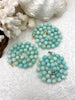
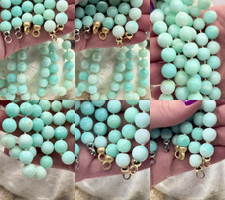
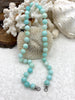
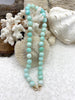
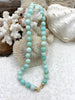
Peruvian Turquoise Opal Hand Knotted Necklace, 17" , Round Stones 10mm, Gold, Matte Gold, Rhodium Finished Ends, Candy Necklace, Fast Ship
Free shipping orders over $150 (USA only)
Peruvian Turquoise Opal Hand Knotted Necklace

Turquoise and opal belong together. One is earthy, opaque, and bold, with a long history of use across ancient Egyptian, Native American, and Persian cultures. The other shifts and shimmers with living color, catching light in a way no other stone quite manages. Put them on the same chain and you get something that feels both ancient and alive. That combination is exactly why turquoise and opal necklace designs keep showing up in designer collections, Etsy shops, and DIY workbenches across the country.
This guide is built for makers and small sellers who want to design a turquoise and opal necklace they can wear confidently or sell without hesitation. Not a vague inspiration post, but a practical breakdown of which components to buy, how to put them together, and how to make sure the finished piece actually holds up. Throughout this guide, Bling By A serves as the sourcing backbone: brass chains by the foot, pendants and charms in multiple finishes, clasps, bales, and findings that coordinate across the same finish family, available individually or in wholesale quantities.
By the time you finish reading, you'll know exactly which chain profile carries stone weight cleanly, which clasp suits your design intent, how to attach a cab without a professional setting, and how to style and care for the finished piece. Let's get to work.
Why turquoise and opal pair so well as a stone combination
The color logic behind the pairing
Turquoise's blue-green opacity does something interesting next to opal: it grounds it. Opal's play-of-color can read as chaotic or fragile on its own, but set beside a bold, matte turquoise, those amber, green, and blue flashes look intentional and sophisticated. As a design observation, the warm matrix veining common in natural turquoise draws out the honey and amber tones in Ethiopian opal, while the cooler blue-green body of the turquoise echoes the blue fire in boulder opal varieties, making a boulder opal turquoise necklace particularly striking. The pairing works across finishes too. Gold warms both stones and gives the combination a Southwestern or boho richness, while rhodium and burnished silver cool everything into a more contemporary, high-contrast look.
Choosing shapes and sizes that balance visually
Scale matters as much as color. A larger turquoise cab pairs naturally with a smaller opal accent, and the reverse works just as well: a dominant opal pendant reads beautifully with turquoise bead accents threaded onto the chain. Teardrop and oval turquoise shapes complement round or freeform opal cuts, since the combination of curved forms creates visual harmony without looking matchy. Asymmetrical or organic shapes push the design toward boho territory, while matched symmetrical shapes read as minimalist and sale-ready, which matters if you're building a product line for an online shop.
Natural, stabilized, and lab options: what to use for handmade pieces
Natural turquoise is porous, granular, and priced higher because it's rarer and harder to cut consistently. Stabilized turquoise is still real turquoise, but the pores have been filled with resin to harden the stone, producing a smoother surface, more uniform color, and better resistance to daily wear. For most DIY and wholesale-level pieces, stabilized turquoise is the smarter choice: it takes handling well and holds up in assembled jewelry without crumbling at the edges. For opal, the main distinction is solid natural opal versus doublets and triplets. Doublets bond a thin opal slice to a dark backing to improve color intensity; triplets add a clear domed cap on top for protection. Both are more affordable than solid opal and more durable in assembled pieces, but they require specific care around water, something you'll want to communicate clearly to buyers.
Picking the right chain style and finish for a turquoise and opal necklace
Chain styles that complement an opal and turquoise pendant
Not every chain handles pendant weight gracefully. For heavier stone pendants, wheat (spiga), rope, and box chains are the most reliable options: their link and weave structures carry weight cleanly without twisting or bunching at the bail, and thicker gauges or soldered links add extra load-bearing reliability. Rolo and mariner chains work well for moderate-weight pieces and bring a clean, classic look to the design. Paperclip chains add editorial structure and visual interest, working especially well with larger, statement-sized pendants where you want the chain itself to be part of the design, though they're best paired with appropriately gauged links for heavier cabs. Snake chains lie flat and suit minimalist designs where the pendant does all the work, though they're better suited to lighter cabs than heavy stones. For most turquoise and opal pendant necklaces, 2mm to 3mm width is a reliable starting point, with heavier pendants calling for thicker profiles and link constructions built to bear the load.
How to match your finish to the stones
Gold and matte gold finishes warm both stones, pulling out amber and honey tones in the opal and giving the turquoise a slightly deeper, richer read. Rhodium and burnished silver cool the palette, creating high-contrast, modern combinations that suit minimalist and contemporary designs. Gunmetal adds edge and drama, making turquoise pop against the dark background and giving opal's flashes a moodier, more striking quality. The most important rule is consistency: when the pendant, chain, and clasp all share the same finish, the piece looks designed rather than assembled. Mixing finishes takes deliberate skill to pull off; for most makers, matching across hardware is the faster path to a polished result.
Bling By A's brass chain lineup and why it matters for builders
Bling By A carries brass chains in a range of profiles, including paperclip, rolo, mariner, snake, box, and mixed-link styles, sold by the foot so you only pay for exactly what your design needs. That structure keeps material costs predictable whether you're making one necklace or fifty. Chain profiles are available across multiple finishes, so you can build a cohesive collection in gold, matte gold, rhodium, burnished silver, or gunmetal without switching suppliers mid-project. For sellers who need consistent volume, wholesale quantities are available, which means finish consistency across a full product line without the procurement headache. Check current inventory at Bling By A before ordering to confirm available profiles and finishes.
Clasps, bales, and findings that hold the design together
Matching clasp type to necklace weight and style
Lobster claw clasps are the most secure option for everyday-wear necklaces, especially those carrying heavier stone pendants. They're easy to operate one-handed and don't require the necklace to be perfectly balanced to stay closed. Toggle clasps work well for statement and boho pieces where the bar-and-ring closure becomes part of the visual design: the toggle adds a decorative element at the back without looking like an afterthought. Spring ring clasps suit lighter, more delicate chains where a smaller mechanism keeps the back of the necklace clean and subtle. For any necklace carrying a substantial turquoise or opal pendant, pair the clasp with a sturdy jump ring at the chain end, sizing it up is inexpensive insurance against the most common point of failure in a necklace. Bling By A carries these clasp types across multiple finishes; confirm current availability before ordering so your hardware coordinates with your chain.
Bales, end caps, and connectors worth knowing
The bale is how your pendant connects to the chain, and sizing it correctly matters more than most makers realize. A bale that's too narrow for the chain creates friction that wears down both components; a bale that's too wide lets the pendant slide sideways and hang crooked. Match the bale's inner opening to your chain's width so the pendant slides freely and hangs straight. End caps give beaded or multi-strand sections a clean termination point, which is essential for designs that combine a beaded turquoise section with a metal chain extender. Connectors are useful for layered or asymmetrical designs where two chain sections meet at a focal point. Sourcing bales, end caps, and clasps from the same supplier as your chain is the simplest way to guarantee finish consistency across the whole piece.
Basic construction techniques any DIYer can execute
Wire wrapping a pendant the right way
Wire wrapping is the most accessible technique for attaching a turquoise or opal cab to a chain without a pre-made setting, and it's fully achievable with basic tools. For a structural frame, 18 to 20-gauge wire gives you enough rigidity to hold the cab securely; 20 to 22-gauge works for lighter decorative wrapping once the frame is formed. Cut about 18 to 24 inches depending on the size of your cab and the complexity of your wrap. Place the wire at the midpoint behind the stone, bring both ends forward along the sides, and cross them at the front to create a frame that holds the cab.
Take one end and wrap it tightly around the other several times to lock the frame, then coil the remaining wire upward, using round-nose pliers to form a loop at the top that will serve as the bail. Finish by wrapping the tail tightly around the base of that loop, trim the excess, and press the end down flush with flat-nose pliers so no sharp wire is exposed. Using brass wire in a matching finish ties the wrapped pendant to your chain visually, a straightforward way to make the whole piece read as intentionally designed rather than improvised.
Bezel setting basics for a more polished finish
A bezel setting uses a pre-made metal frame, called a bezel cup, that wraps around the stone's perimeter and is pressed down to secure it. The result is cleaner and more professional than wire wrapping, and it suits minimalist and contemporary designs where you want the stone to take center stage with no visible wire. Readymade bezel cups in gold, silver, and gunmetal are available as findings from suppliers like Bling By A, which means you don't need metalsmithing tools or a torch to use this technique. Set the cab into the bezel cup, check that it sits flush, then use a bezel roller or the back of a spoon to gently press the metal wall down over the stone's edge in even increments, working opposite sides alternately to keep the stone centered. For pieces intended for resale, a small amount of two-part epoxy applied to the base of the cab before setting adds a secondary bond that helps protect against the cab loosening over time, though note that adhesives can complicate future repairs, so use them selectively.
Styling ideas: boho, layered, and minimalist looks
Building a boho turquoise opal necklace or layered look
Layering is one of the highest-value moves you can make with a turquoise opal pendant necklace, both visually and commercially. A three-chain stack works well at 16, 18, and 20 to 22 inches: a shorter chain with a small coin or charm pendant at 16 inches, the main turquoise and opal necklace at 18 inches, and a longer mixed-link or paperclip chain at 20 to 22 inches to anchor the eye and add depth. Matte gold and burnished silver finishes both suit a boho palette, especially when the chain textures vary across the three layers. If you're selling online, listing a layered necklace set rather than a single piece can increase perceived value and average order size: a styled set removes decision fatigue for buyers who aren't sure how to size or pair chains themselves.
Designing a minimalist turquoise opal piece for everyday wear
For a minimalist design, the stone carries the full visual weight and the hardware stays quiet. A single small turquoise and opal necklace, pendant kept under 20mm in total height, on an 18-inch snake or rolo chain in rhodium or gold finish is clean, versatile, and appropriate for office or casual wear. Keep the pendant small, the chain fine at 1.5mm to 2mm, and the clasp discreet. This style targets the everyday jewelry buyer who wants something wearable without a statement, and it's one of the easiest pieces to move consistently as a small seller because the price point, wearability, and styling flexibility work together. A simple product photo on a clean background shows the stone clearly without competing visual noise, a practical choice for listing a minimalist turquoise opal beaded necklace or pendant online.
Caring for your finished turquoise and opal necklace
Cleaning and daily care
Both turquoise and opal are relatively soft and porous, which means they need gentle handling at every stage: during assembly, wear, and cleaning. Warm water, a drop of mild soap, and a soft cloth are all that's needed for routine cleaning. Ultrasonic cleaners, steam, and harsh chemicals are off the table for both stones, they can damage the stone's surface, and in the case of stabilized turquoise, they break down the resin that holds the stone's structure together. After cleaning, wipe the chain and clasp dry promptly to prevent finish tarnish, paying attention to the clasp mechanism where water tends to collect.
Storage and special handling for doublets and triplets
Doublet and triplet opals should never be soaked, because water weakens the adhesive bond between layers and causes lifting, clouding, or a grayish appearance that's difficult to reverse. Wipe them with a barely damp cloth if needed, dry immediately, and keep them away from perfume, lotion, and cleaning products during wear. Store any turquoise and opal necklace separately from harder gemstones to avoid scratching: a soft cloth pouch or lined box is ideal. In very dry climates, a slightly humid storage environment reduces the risk of opal crazing, where the stone develops a fine network of surface cracks from moisture loss. Including a simple care card with any piece you sell online covers these points for the buyer, helps reduce returns from preventable damage, and builds the kind of trust that encourages repeat customers.
Build it right the first time
A well-made turquoise and opal necklace starts with the right stone pairing and ends with quality hardware, soldered jump rings, an appropriately sized clasp, and a chain profile suited to the pendant's weight. The chain profile, the clasp type, the bale size, and the finish all contribute to whether the finished piece looks like a designed object or a collection of parts. Getting those decisions right before you start saves time, materials, and rework.
Bling By A is built to support exactly this kind of build: brass chains sold by the foot in multiple profiles and finishes, pendants and charms across finish families, clasps and findings that coordinate without switching suppliers. Buying from a single source means every component in the piece shares the same finish standard, which is the fastest shortcut to a result that looks cohesive and intentional. Wholesale pricing means that consistency scales when your volume does.
Browse Bling By A's brass chain collection and pendant lineup, pick the finish that matches your design direction, and start building your turquoise and opal necklace. The stones do the visual work; the right components make sure it lasts.
FEATURES:
💎 Genuine Peruvian Opals: Each necklace is unique due to the natural opals used.
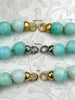
💍 Gold, Matte Gold, or Rhodium End Caps: Made of plated brass, these end caps give the necklace a luxurious look.
📏 17" Long: The perfect length for a necklace.
SPECIFICATIONS:
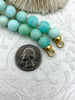
- Beads measure approximately 10mm
- Lead safe, nickel safe
- Fast Shipping: Orders placed by 11:00 am EST Monday-Friday ship the same day or next business day.
HOW IT WORKS:
This Hand Knotted Turquoise Peruvian Opal Necklace is made with genuine Peruvian opals that are hand-knotted and feature gold, rhodium, or matte gold end caps made of plated brass. The necklace is 17" long and the beads measure approximately 10mm.
FAQ:
Q: Is this necklace lead and nickel safe?
A: Yes, this necklace is lead and nickel safe.
Q: How long is the necklace?
A: The necklace is 17" long.
Q: Is there an Instagram page for inspiration?
A: Yes, check out the @Blingbya Instagram page for creative ideas!
Q: How do I care for my chain?
A: Jewelry Care Recommendations. Apply cosmetics, hair products, lotions, perfumes and powders prior to donning your jewelry.
Remove your pieces before showering, swimming, sunbathing and exercising.
Metals may tarnish over time due to oxygen and natural body oils
To reduce tarnishing, store jewelry in a sealed bag or box in a dry, dark and cool place.
Peruvian Turquoise Opal Hand Knotted Necklace
Turquoise and opal belong together. One is earthy, opaque, and bold, with a long history of use across ancient Egyptian, Native American, and Persian cultures. The other shifts and shimmers with living color, catching light in a way no other stone quite manages. Put them on the same chain and you get something that feels both ancient and alive. That combination is exactly why turquoise and opal necklace designs keep showing up in designer collections, Etsy shops, and DIY workbenches across the country.
This guide is built for makers and small sellers who want to design a turquoise and opal necklace they can wear confidently or sell without hesitation. Not a vague inspiration post, but a practical breakdown of which components to buy, how to put them together, and how to make sure the finished piece actually holds up. Throughout this guide, Bling By A serves as the sourcing backbone: brass chains by the foot, pendants and charms in multiple finishes, clasps, bales, and findings that coordinate across the same finish family, available individually or in wholesale quantities.
By the time you finish reading, you'll know exactly which chain profile carries stone weight cleanly, which clasp suits your design intent, how to attach a cab without a professional setting, and how to style and care for the finished piece. Let's get to work.
Why turquoise and opal pair so well as a stone combination
The color logic behind the pairing
Turquoise's blue-green opacity does something interesting next to opal: it grounds it. Opal's play-of-color can read as chaotic or fragile on its own, but set beside a bold, matte turquoise, those amber, green, and blue flashes look intentional and sophisticated. As a design observation, the warm matrix veining common in natural turquoise draws out the honey and amber tones in Ethiopian opal, while the cooler blue-green body of the turquoise echoes the blue fire in boulder opal varieties, making a boulder opal turquoise necklace particularly striking. The pairing works across finishes too. Gold warms both stones and gives the combination a Southwestern or boho richness, while rhodium and burnished silver cool everything into a more contemporary, high-contrast look.
Choosing shapes and sizes that balance visually
Scale matters as much as color. A larger turquoise cab pairs naturally with a smaller opal accent, and the reverse works just as well: a dominant opal pendant reads beautifully with turquoise bead accents threaded onto the chain. Teardrop and oval turquoise shapes complement round or freeform opal cuts, since the combination of curved forms creates visual harmony without looking matchy. Asymmetrical or organic shapes push the design toward boho territory, while matched symmetrical shapes read as minimalist and sale-ready, which matters if you're building a product line for an online shop.
Natural, stabilized, and lab options: what to use for handmade pieces
Natural turquoise is porous, granular, and priced higher because it's rarer and harder to cut consistently. Stabilized turquoise is still real turquoise, but the pores have been filled with resin to harden the stone, producing a smoother surface, more uniform color, and better resistance to daily wear. For most DIY and wholesale-level pieces, stabilized turquoise is the smarter choice: it takes handling well and holds up in assembled jewelry without crumbling at the edges. For opal, the main distinction is solid natural opal versus doublets and triplets. Doublets bond a thin opal slice to a dark backing to improve color intensity; triplets add a clear domed cap on top for protection. Both are more affordable than solid opal and more durable in assembled pieces, but they require specific care around water, something you'll want to communicate clearly to buyers.
Picking the right chain style and finish for a turquoise and opal necklace
Chain styles that complement an opal and turquoise pendant
Not every chain handles pendant weight gracefully. For heavier stone pendants, wheat (spiga), rope, and box chains are the most reliable options: their link and weave structures carry weight cleanly without twisting or bunching at the bail, and thicker gauges or soldered links add extra load-bearing reliability. Rolo and mariner chains work well for moderate-weight pieces and bring a clean, classic look to the design. Paperclip chains add editorial structure and visual interest, working especially well with larger, statement-sized pendants where you want the chain itself to be part of the design, though they're best paired with appropriately gauged links for heavier cabs. Snake chains lie flat and suit minimalist designs where the pendant does all the work, though they're better suited to lighter cabs than heavy stones. For most turquoise and opal pendant necklaces, 2mm to 3mm width is a reliable starting point, with heavier pendants calling for thicker profiles and link constructions built to bear the load.
How to match your finish to the stones
Gold and matte gold finishes warm both stones, pulling out amber and honey tones in the opal and giving the turquoise a slightly deeper, richer read. Rhodium and burnished silver cool the palette, creating high-contrast, modern combinations that suit minimalist and contemporary designs. Gunmetal adds edge and drama, making turquoise pop against the dark background and giving opal's flashes a moodier, more striking quality. The most important rule is consistency: when the pendant, chain, and clasp all share the same finish, the piece looks designed rather than assembled. Mixing finishes takes deliberate skill to pull off; for most makers, matching across hardware is the faster path to a polished result.
Bling By A's brass chain lineup and why it matters for builders
Bling By A carries brass chains in a range of profiles, including paperclip, rolo, mariner, snake, box, and mixed-link styles, sold by the foot so you only pay for exactly what your design needs. That structure keeps material costs predictable whether you're making one necklace or fifty. Chain profiles are available across multiple finishes, so you can build a cohesive collection in gold, matte gold, rhodium, burnished silver, or gunmetal without switching suppliers mid-project. For sellers who need consistent volume, wholesale quantities are available, which means finish consistency across a full product line without the procurement headache. Check current inventory at Bling By A before ordering to confirm available profiles and finishes.
Clasps, bales, and findings that hold the design together
Matching clasp type to necklace weight and style
Lobster claw clasps are the most secure option for everyday-wear necklaces, especially those carrying heavier stone pendants. They're easy to operate one-handed and don't require the necklace to be perfectly balanced to stay closed. Toggle clasps work well for statement and boho pieces where the bar-and-ring closure becomes part of the visual design: the toggle adds a decorative element at the back without looking like an afterthought. Spring ring clasps suit lighter, more delicate chains where a smaller mechanism keeps the back of the necklace clean and subtle. For any necklace carrying a substantial turquoise or opal pendant, pair the clasp with a sturdy jump ring at the chain end, sizing it up is inexpensive insurance against the most common point of failure in a necklace. Bling By A carries these clasp types across multiple finishes; confirm current availability before ordering so your hardware coordinates with your chain.
Bales, end caps, and connectors worth knowing
The bale is how your pendant connects to the chain, and sizing it correctly matters more than most makers realize. A bale that's too narrow for the chain creates friction that wears down both components; a bale that's too wide lets the pendant slide sideways and hang crooked. Match the bale's inner opening to your chain's width so the pendant slides freely and hangs straight. End caps give beaded or multi-strand sections a clean termination point, which is essential for designs that combine a beaded turquoise section with a metal chain extender. Connectors are useful for layered or asymmetrical designs where two chain sections meet at a focal point. Sourcing bales, end caps, and clasps from the same supplier as your chain is the simplest way to guarantee finish consistency across the whole piece.
Basic construction techniques any DIYer can execute
Wire wrapping a pendant the right way
Wire wrapping is the most accessible technique for attaching a turquoise or opal cab to a chain without a pre-made setting, and it's fully achievable with basic tools. For a structural frame, 18 to 20-gauge wire gives you enough rigidity to hold the cab securely; 20 to 22-gauge works for lighter decorative wrapping once the frame is formed. Cut about 18 to 24 inches depending on the size of your cab and the complexity of your wrap. Place the wire at the midpoint behind the stone, bring both ends forward along the sides, and cross them at the front to create a frame that holds the cab.
Take one end and wrap it tightly around the other several times to lock the frame, then coil the remaining wire upward, using round-nose pliers to form a loop at the top that will serve as the bail. Finish by wrapping the tail tightly around the base of that loop, trim the excess, and press the end down flush with flat-nose pliers so no sharp wire is exposed. Using brass wire in a matching finish ties the wrapped pendant to your chain visually, a straightforward way to make the whole piece read as intentionally designed rather than improvised.
Bezel setting basics for a more polished finish
A bezel setting uses a pre-made metal frame, called a bezel cup, that wraps around the stone's perimeter and is pressed down to secure it. The result is cleaner and more professional than wire wrapping, and it suits minimalist and contemporary designs where you want the stone to take center stage with no visible wire. Readymade bezel cups in gold, silver, and gunmetal are available as findings from suppliers like Bling By A, which means you don't need metalsmithing tools or a torch to use this technique. Set the cab into the bezel cup, check that it sits flush, then use a bezel roller or the back of a spoon to gently press the metal wall down over the stone's edge in even increments, working opposite sides alternately to keep the stone centered. For pieces intended for resale, a small amount of two-part epoxy applied to the base of the cab before setting adds a secondary bond that helps protect against the cab loosening over time, though note that adhesives can complicate future repairs, so use them selectively.
Styling ideas: boho, layered, and minimalist looks
Building a boho turquoise opal necklace or layered look
Layering is one of the highest-value moves you can make with a turquoise opal pendant necklace, both visually and commercially. A three-chain stack works well at 16, 18, and 20 to 22 inches: a shorter chain with a small coin or charm pendant at 16 inches, the main turquoise and opal necklace at 18 inches, and a longer mixed-link or paperclip chain at 20 to 22 inches to anchor the eye and add depth. Matte gold and burnished silver finishes both suit a boho palette, especially when the chain textures vary across the three layers. If you're selling online, listing a layered necklace set rather than a single piece can increase perceived value and average order size: a styled set removes decision fatigue for buyers who aren't sure how to size or pair chains themselves.
Designing a minimalist turquoise opal piece for everyday wear
For a minimalist design, the stone carries the full visual weight and the hardware stays quiet. A single small turquoise and opal necklace, pendant kept under 20mm in total height, on an 18-inch snake or rolo chain in rhodium or gold finish is clean, versatile, and appropriate for office or casual wear. Keep the pendant small, the chain fine at 1.5mm to 2mm, and the clasp discreet. This style targets the everyday jewelry buyer who wants something wearable without a statement, and it's one of the easiest pieces to move consistently as a small seller because the price point, wearability, and styling flexibility work together. A simple product photo on a clean background shows the stone clearly without competing visual noise, a practical choice for listing a minimalist turquoise opal beaded necklace or pendant online.
Caring for your finished turquoise and opal necklace
Cleaning and daily care
Both turquoise and opal are relatively soft and porous, which means they need gentle handling at every stage: during assembly, wear, and cleaning. Warm water, a drop of mild soap, and a soft cloth are all that's needed for routine cleaning. Ultrasonic cleaners, steam, and harsh chemicals are off the table for both stones, they can damage the stone's surface, and in the case of stabilized turquoise, they break down the resin that holds the stone's structure together. After cleaning, wipe the chain and clasp dry promptly to prevent finish tarnish, paying attention to the clasp mechanism where water tends to collect.
Storage and special handling for doublets and triplets
Doublet and triplet opals should never be soaked, because water weakens the adhesive bond between layers and causes lifting, clouding, or a grayish appearance that's difficult to reverse. Wipe them with a barely damp cloth if needed, dry immediately, and keep them away from perfume, lotion, and cleaning products during wear. Store any turquoise and opal necklace separately from harder gemstones to avoid scratching: a soft cloth pouch or lined box is ideal. In very dry climates, a slightly humid storage environment reduces the risk of opal crazing, where the stone develops a fine network of surface cracks from moisture loss. Including a simple care card with any piece you sell online covers these points for the buyer, helps reduce returns from preventable damage, and builds the kind of trust that encourages repeat customers.
Build it right the first time
A well-made turquoise and opal necklace starts with the right stone pairing and ends with quality hardware, soldered jump rings, an appropriately sized clasp, and a chain profile suited to the pendant's weight. The chain profile, the clasp type, the bale size, and the finish all contribute to whether the finished piece looks like a designed object or a collection of parts. Getting those decisions right before you start saves time, materials, and rework.
Bling By A is built to support exactly this kind of build: brass chains sold by the foot in multiple profiles and finishes, pendants and charms across finish families, clasps and findings that coordinate without switching suppliers. Buying from a single source means every component in the piece shares the same finish standard, which is the fastest shortcut to a result that looks cohesive and intentional. Wholesale pricing means that consistency scales when your volume does.
Browse Bling By A's brass chain collection and pendant lineup, pick the finish that matches your design direction, and start building your turquoise and opal necklace. The stones do the visual work; the right components make sure it lasts.
FEATURES:
💎 Genuine Peruvian Opals: Each necklace is unique due to the natural opals used.
💍 Gold, Matte Gold, or Rhodium End Caps: Made of plated brass, these end caps give the necklace a luxurious look.
📏 17" Long: The perfect length for a necklace.
SPECIFICATIONS:
- Beads measure approximately 10mm
- Lead safe, nickel safe
- Fast Shipping: Orders placed by 11:00 am EST Monday-Friday ship the same day or next business day.
HOW IT WORKS:
This Hand Knotted Turquoise Peruvian Opal Necklace is made with genuine Peruvian opals that are hand-knotted and feature gold, rhodium, or matte gold end caps made of plated brass. The necklace is 17" long and the beads measure approximately 10mm.
FAQ:
Q: Is this necklace lead and nickel safe?
A: Yes, this necklace is lead and nickel safe.
Q: How long is the necklace?
A: The necklace is 17" long.
Q: Is there an Instagram page for inspiration?
A: Yes, check out the @Blingbya Instagram page for creative ideas!
Q: How do I care for my chain?
A: Jewelry Care Recommendations. Apply cosmetics, hair products, lotions, perfumes and powders prior to donning your jewelry.
Remove your pieces before showering, swimming, sunbathing and exercising.
Metals may tarnish over time due to oxygen and natural body oils
To reduce tarnishing, store jewelry in a sealed bag or box in a dry, dark and cool place.
Peruvian Turquoise Opal Hand Knotted Necklace
Turquoise and opal belong together. One is earthy, opaque, and bold, with a long history of use across ancient Egyptian, Native American, and Persian cultures. The other shifts and shimmers with living color, catching light in a way no other stone quite manages. Put them on the same chain and you get something that feels both ancient and alive. That combination is exactly why turquoise and opal necklace designs keep showing up in designer collections, Etsy shops, and DIY workbenches across the country.
This guide is built for makers and small sellers who want to design a turquoise and opal necklace they can wear confidently or sell without hesitation. Not a vague inspiration post, but a practical breakdown of which components to buy, how to put them together, and how to make sure the finished piece actually holds up. Throughout this guide, Bling By A serves as the sourcing backbone: brass chains by the foot, pendants and charms in multiple finishes, clasps, bales, and findings that coordinate across the same finish family, available individually or in wholesale quantities.
By the time you finish reading, you'll know exactly which chain profile carries stone weight cleanly, which clasp suits your design intent, how to attach a cab without a professional setting, and how to style and care for the finished piece. Let's get to work.
Why turquoise and opal pair so well as a stone combination
The color logic behind the pairing
Turquoise's blue-green opacity does something interesting next to opal: it grounds it. Opal's play-of-color can read as chaotic or fragile on its own, but set beside a bold, matte turquoise, those amber, green, and blue flashes look intentional and sophisticated. As a design observation, the warm matrix veining common in natural turquoise draws out the honey and amber tones in Ethiopian opal, while the cooler blue-green body of the turquoise echoes the blue fire in boulder opal varieties, making a boulder opal turquoise necklace particularly striking. The pairing works across finishes too. Gold warms both stones and gives the combination a Southwestern or boho richness, while rhodium and burnished silver cool everything into a more contemporary, high-contrast look.
Choosing shapes and sizes that balance visually
Scale matters as much as color. A larger turquoise cab pairs naturally with a smaller opal accent, and the reverse works just as well: a dominant opal pendant reads beautifully with turquoise bead accents threaded onto the chain. Teardrop and oval turquoise shapes complement round or freeform opal cuts, since the combination of curved forms creates visual harmony without looking matchy. Asymmetrical or organic shapes push the design toward boho territory, while matched symmetrical shapes read as minimalist and sale-ready, which matters if you're building a product line for an online shop.
Natural, stabilized, and lab options: what to use for handmade pieces
Natural turquoise is porous, granular, and priced higher because it's rarer and harder to cut consistently. Stabilized turquoise is still real turquoise, but the pores have been filled with resin to harden the stone, producing a smoother surface, more uniform color, and better resistance to daily wear. For most DIY and wholesale-level pieces, stabilized turquoise is the smarter choice: it takes handling well and holds up in assembled jewelry without crumbling at the edges. For opal, the main distinction is solid natural opal versus doublets and triplets. Doublets bond a thin opal slice to a dark backing to improve color intensity; triplets add a clear domed cap on top for protection. Both are more affordable than solid opal and more durable in assembled pieces, but they require specific care around water, something you'll want to communicate clearly to buyers.
Picking the right chain style and finish for a turquoise and opal necklace
Chain styles that complement an opal and turquoise pendant
Not every chain handles pendant weight gracefully. For heavier stone pendants, wheat (spiga), rope, and box chains are the most reliable options: their link and weave structures carry weight cleanly without twisting or bunching at the bail, and thicker gauges or soldered links add extra load-bearing reliability. Rolo and mariner chains work well for moderate-weight pieces and bring a clean, classic look to the design. Paperclip chains add editorial structure and visual interest, working especially well with larger, statement-sized pendants where you want the chain itself to be part of the design, though they're best paired with appropriately gauged links for heavier cabs. Snake chains lie flat and suit minimalist designs where the pendant does all the work, though they're better suited to lighter cabs than heavy stones. For most turquoise and opal pendant necklaces, 2mm to 3mm width is a reliable starting point, with heavier pendants calling for thicker profiles and link constructions built to bear the load.
How to match your finish to the stones
Gold and matte gold finishes warm both stones, pulling out amber and honey tones in the opal and giving the turquoise a slightly deeper, richer read. Rhodium and burnished silver cool the palette, creating high-contrast, modern combinations that suit minimalist and contemporary designs. Gunmetal adds edge and drama, making turquoise pop against the dark background and giving opal's flashes a moodier, more striking quality. The most important rule is consistency: when the pendant, chain, and clasp all share the same finish, the piece looks designed rather than assembled. Mixing finishes takes deliberate skill to pull off; for most makers, matching across hardware is the faster path to a polished result.
Bling By A's brass chain lineup and why it matters for builders
Bling By A carries brass chains in a range of profiles, including paperclip, rolo, mariner, snake, box, and mixed-link styles, sold by the foot so you only pay for exactly what your design needs. That structure keeps material costs predictable whether you're making one necklace or fifty. Chain profiles are available across multiple finishes, so you can build a cohesive collection in gold, matte gold, rhodium, burnished silver, or gunmetal without switching suppliers mid-project. For sellers who need consistent volume, wholesale quantities are available, which means finish consistency across a full product line without the procurement headache. Check current inventory at Bling By A before ordering to confirm available profiles and finishes.
Clasps, bales, and findings that hold the design together
Matching clasp type to necklace weight and style
Lobster claw clasps are the most secure option for everyday-wear necklaces, especially those carrying heavier stone pendants. They're easy to operate one-handed and don't require the necklace to be perfectly balanced to stay closed. Toggle clasps work well for statement and boho pieces where the bar-and-ring closure becomes part of the visual design: the toggle adds a decorative element at the back without looking like an afterthought. Spring ring clasps suit lighter, more delicate chains where a smaller mechanism keeps the back of the necklace clean and subtle. For any necklace carrying a substantial turquoise or opal pendant, pair the clasp with a sturdy jump ring at the chain end, sizing it up is inexpensive insurance against the most common point of failure in a necklace. Bling By A carries these clasp types across multiple finishes; confirm current availability before ordering so your hardware coordinates with your chain.
Bales, end caps, and connectors worth knowing
The bale is how your pendant connects to the chain, and sizing it correctly matters more than most makers realize. A bale that's too narrow for the chain creates friction that wears down both components; a bale that's too wide lets the pendant slide sideways and hang crooked. Match the bale's inner opening to your chain's width so the pendant slides freely and hangs straight. End caps give beaded or multi-strand sections a clean termination point, which is essential for designs that combine a beaded turquoise section with a metal chain extender. Connectors are useful for layered or asymmetrical designs where two chain sections meet at a focal point. Sourcing bales, end caps, and clasps from the same supplier as your chain is the simplest way to guarantee finish consistency across the whole piece.
Basic construction techniques any DIYer can execute
Wire wrapping a pendant the right way
Wire wrapping is the most accessible technique for attaching a turquoise or opal cab to a chain without a pre-made setting, and it's fully achievable with basic tools. For a structural frame, 18 to 20-gauge wire gives you enough rigidity to hold the cab securely; 20 to 22-gauge works for lighter decorative wrapping once the frame is formed. Cut about 18 to 24 inches depending on the size of your cab and the complexity of your wrap. Place the wire at the midpoint behind the stone, bring both ends forward along the sides, and cross them at the front to create a frame that holds the cab.
Take one end and wrap it tightly around the other several times to lock the frame, then coil the remaining wire upward, using round-nose pliers to form a loop at the top that will serve as the bail. Finish by wrapping the tail tightly around the base of that loop, trim the excess, and press the end down flush with flat-nose pliers so no sharp wire is exposed. Using brass wire in a matching finish ties the wrapped pendant to your chain visually, a straightforward way to make the whole piece read as intentionally designed rather than improvised.
Bezel setting basics for a more polished finish
A bezel setting uses a pre-made metal frame, called a bezel cup, that wraps around the stone's perimeter and is pressed down to secure it. The result is cleaner and more professional than wire wrapping, and it suits minimalist and contemporary designs where you want the stone to take center stage with no visible wire. Readymade bezel cups in gold, silver, and gunmetal are available as findings from suppliers like Bling By A, which means you don't need metalsmithing tools or a torch to use this technique. Set the cab into the bezel cup, check that it sits flush, then use a bezel roller or the back of a spoon to gently press the metal wall down over the stone's edge in even increments, working opposite sides alternately to keep the stone centered. For pieces intended for resale, a small amount of two-part epoxy applied to the base of the cab before setting adds a secondary bond that helps protect against the cab loosening over time, though note that adhesives can complicate future repairs, so use them selectively.
Styling ideas: boho, layered, and minimalist looks
Building a boho turquoise opal necklace or layered look
Layering is one of the highest-value moves you can make with a turquoise opal pendant necklace, both visually and commercially. A three-chain stack works well at 16, 18, and 20 to 22 inches: a shorter chain with a small coin or charm pendant at 16 inches, the main turquoise and opal necklace at 18 inches, and a longer mixed-link or paperclip chain at 20 to 22 inches to anchor the eye and add depth. Matte gold and burnished silver finishes both suit a boho palette, especially when the chain textures vary across the three layers. If you're selling online, listing a layered necklace set rather than a single piece can increase perceived value and average order size: a styled set removes decision fatigue for buyers who aren't sure how to size or pair chains themselves.
Designing a minimalist turquoise opal piece for everyday wear
For a minimalist design, the stone carries the full visual weight and the hardware stays quiet. A single small turquoise and opal necklace, pendant kept under 20mm in total height, on an 18-inch snake or rolo chain in rhodium or gold finish is clean, versatile, and appropriate for office or casual wear. Keep the pendant small, the chain fine at 1.5mm to 2mm, and the clasp discreet. This style targets the everyday jewelry buyer who wants something wearable without a statement, and it's one of the easiest pieces to move consistently as a small seller because the price point, wearability, and styling flexibility work together. A simple product photo on a clean background shows the stone clearly without competing visual noise, a practical choice for listing a minimalist turquoise opal beaded necklace or pendant online.
Caring for your finished turquoise and opal necklace
Cleaning and daily care
Both turquoise and opal are relatively soft and porous, which means they need gentle handling at every stage: during assembly, wear, and cleaning. Warm water, a drop of mild soap, and a soft cloth are all that's needed for routine cleaning. Ultrasonic cleaners, steam, and harsh chemicals are off the table for both stones, they can damage the stone's surface, and in the case of stabilized turquoise, they break down the resin that holds the stone's structure together. After cleaning, wipe the chain and clasp dry promptly to prevent finish tarnish, paying attention to the clasp mechanism where water tends to collect.
Storage and special handling for doublets and triplets
Doublet and triplet opals should never be soaked, because water weakens the adhesive bond between layers and causes lifting, clouding, or a grayish appearance that's difficult to reverse. Wipe them with a barely damp cloth if needed, dry immediately, and keep them away from perfume, lotion, and cleaning products during wear. Store any turquoise and opal necklace separately from harder gemstones to avoid scratching: a soft cloth pouch or lined box is ideal. In very dry climates, a slightly humid storage environment reduces the risk of opal crazing, where the stone develops a fine network of surface cracks from moisture loss. Including a simple care card with any piece you sell online covers these points for the buyer, helps reduce returns from preventable damage, and builds the kind of trust that encourages repeat customers.
Build it right the first time
A well-made turquoise and opal necklace starts with the right stone pairing and ends with quality hardware, soldered jump rings, an appropriately sized clasp, and a chain profile suited to the pendant's weight. The chain profile, the clasp type, the bale size, and the finish all contribute to whether the finished piece looks like a designed object or a collection of parts. Getting those decisions right before you start saves time, materials, and rework.
Bling By A is built to support exactly this kind of build: brass chains sold by the foot in multiple profiles and finishes, pendants and charms across finish families, clasps and findings that coordinate without switching suppliers. Buying from a single source means every component in the piece shares the same finish standard, which is the fastest shortcut to a result that looks cohesive and intentional. Wholesale pricing means that consistency scales when your volume does.
Browse Bling By A's brass chain collection and pendant lineup, pick the finish that matches your design direction, and start building your turquoise and opal necklace. The stones do the visual work; the right components make sure it lasts.
FEATURES:
💎 Genuine Peruvian Opals: Each necklace is unique due to the natural opals used.
💍 Gold, Matte Gold, or Rhodium End Caps: Made of plated brass, these end caps give the necklace a luxurious look.
📏 17" Long: The perfect length for a necklace.
SPECIFICATIONS:
- Beads measure approximately 10mm
- Lead safe, nickel safe
- Fast Shipping: Orders placed by 11:00 am EST Monday-Friday ship the same day or next business day.
HOW IT WORKS:
This Hand Knotted Turquoise Peruvian Opal Necklace is made with genuine Peruvian opals that are hand-knotted and feature gold, rhodium, or matte gold end caps made of plated brass. The necklace is 17" long and the beads measure approximately 10mm.
FAQ:
Q: Is this necklace lead and nickel safe?
A: Yes, this necklace is lead and nickel safe.
Q: How long is the necklace?
A: The necklace is 17" long.
Q: Is there an Instagram page for inspiration?
A: Yes, check out the @Blingbya Instagram page for creative ideas!
Q: How do I care for my chain?
A: Jewelry Care Recommendations. Apply cosmetics, hair products, lotions, perfumes and powders prior to donning your jewelry.
Remove your pieces before showering, swimming, sunbathing and exercising.
Metals may tarnish over time due to oxygen and natural body oils
To reduce tarnishing, store jewelry in a sealed bag or box in a dry, dark and cool place.
Gorgeous beads, high quality, thank you!
Very pretty necklace
Related Products


Don't Take Our Word For it! Here's What Our Customers Think:
-

“Beautiful, great quality, fast delivery, very excited to use in my project. ” - Midori Kagan
-

“BlingbyA is my all time favorite shop. They are personable and always professional. This shops products are top notch. I am always thrilled like a child at Christmas when I receive my items in mail. If you are looking for great service and awesome products this is definitely the place to shop. I will be a lifetime customer. Thank you for always bringing a smile to me. May all your successes be great. Highly recommend. 😊❤😊 ” - LeahAnne Sease
-

“Items as expected. Very nice for the price. Would order these again. The gun metal are my favorite. ” - Barbara Lyons
