



Rosary Chain for Jewelry Making | Brass, Gold & Silver Rosary Beaded Chains | BlingByA
Rosary Chain for Jewelry Making
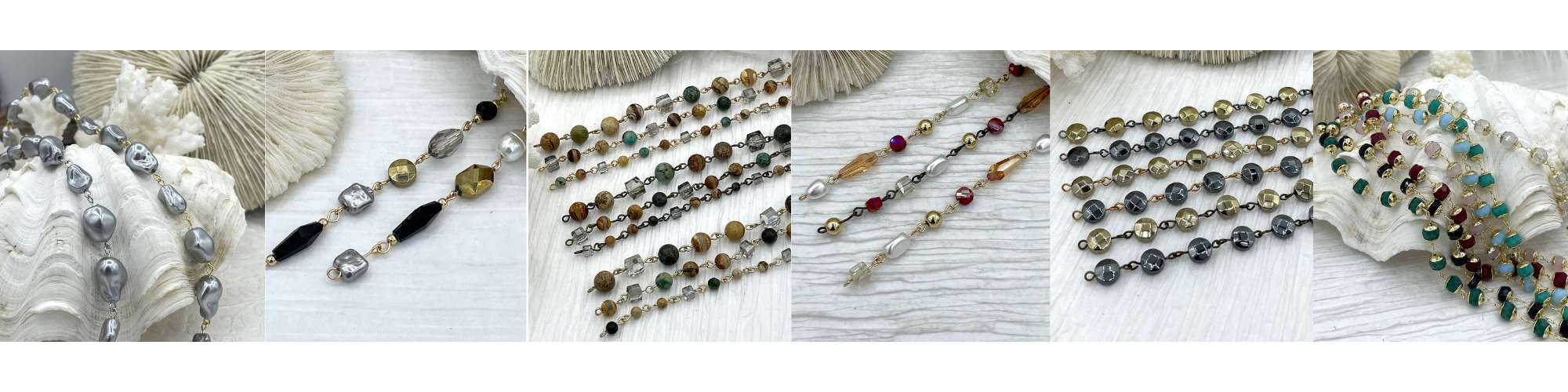
Create distinctive necklaces, bracelets, rosaries, charm holders, and layered jewelry with our rosary chain for jewelry making. BlingByA’s rosary beaded chains combine decorative beads with electroplated brass pins in a range of bead sizes, colors, textures, and wire finishes. Explore sparkling cubic zirconia, glass pearl, crystal, and other eye-catching styles designed to make jewelry assembly faster while giving every finished piece a polished, handcrafted appearance.
Whether you need a delicate accent chain, a bold focal strand, or coordinated material for a larger production run, browse the collection below to find a rosary chain that complements your pendants, clasps, charms, and design aesthetic.


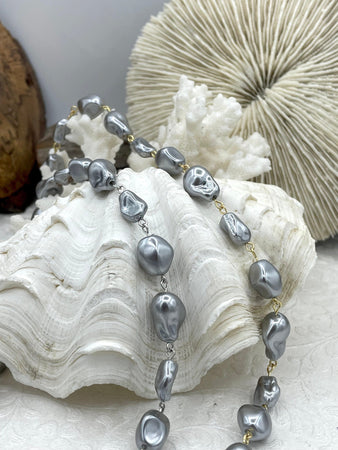
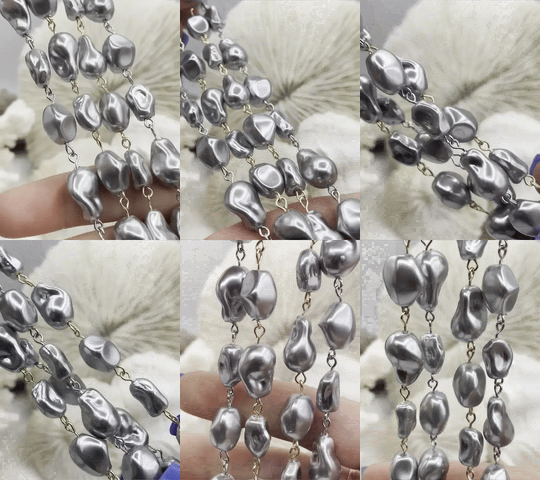
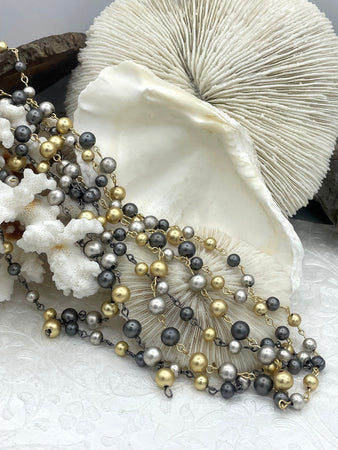
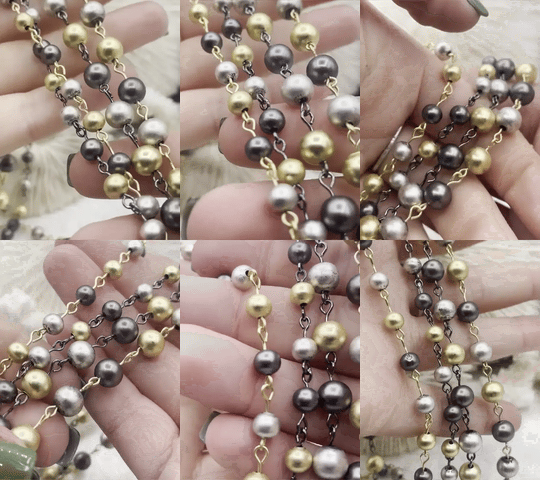
Rosary Chain for Jewelry Making, Necklaces, Bracelets and More
Rosary chain is one of the most versatile decorative chains available to jewelry designers. Instead of relying on plain metal links alone, this chain features individual beads connected at regular intervals with wrapped or looped wire links. The result is a flexible strand that provides color, texture, movement, and visual rhythm before a pendant, clasp, or additional embellishment is added.
Although the name comes from its traditional association with rosaries, modern rosary beaded chain is used in many kinds of jewelry. Designers turn it into pendant necklaces, multi-strand pieces, bracelets, anklets, earrings, eyeglass chains, lanyards, charm necklaces, and fashion-forward layered designs. It can serve as the main body of a piece or as a decorative accent combined with base metal chain, brass chain, pearls, ribbon, cord, or hand-knotted strands.
What Is Rosary Chain?
A rosary chain is a continuous series of beads joined by wire links. Each bead is individually secured between loops or wraps, creating small articulated sections that move naturally when worn. Unlike a standard cable, curb, or paperclip chain, the beads are part of the chain’s structure rather than charms attached afterward.
Jewelry makers may also call this material rosary beaded chain, wire-wrapped bead chain, linked bead chain, or rosary-style chain. Product terminology can vary, but the defining feature is the repeating pattern of bead-and-wire connections. This construction gives the strand its recognizable decorative appearance and makes it easy to customize by cutting between links and attaching findings.
Rosary chain should not be confused with ball chain. Ball chain is made from small metal spheres joined by short connectors, while rosary chain normally uses drilled decorative beads held by visible wire loops. It is also different from a finished rosary: the chain is a jewelry-making component that can be transformed into religious or nonreligious designs depending on the maker’s purpose.
Why Jewelry Designers Choose Rosary Beaded Chain
The greatest advantage of rosary chain is that it adds detail immediately. Making an equivalent strand by hand requires beads, wire, cutters, pliers, careful loop formation, and significant time. Ready-made chain allows a designer to begin with a coordinated beaded foundation and focus on composition, focal elements, sizing, and finishing.
Color and Texture Are Built In
The beads create a repeating pattern that gives jewelry depth without overwhelming the design. A subtle neutral chain can support an ornate pendant, while a vivid or sparkling chain can become the main focal point. Because each bead is separated by wire, the strand often appears lighter and more delicate than a fully strung necklace made with the same bead size.
It Is Easy to Customize
Makers can cut the strand to a desired length, connect it to a clasp, add an extender, suspend a pendant, or combine it with another chain. Short sections can be used for earrings and bracelet accents, while longer lengths can create opera necklaces, wrap bracelets, or layered looks. This flexibility makes rosary chain useful for one-of-a-kind work as well as repeatable product collections.
Types of Rosary Chain to Consider
Choosing the right chain begins with the bead material, bead size, wire finish, spacing, and intended project. Product availability changes, so review the photographs, measurements, and individual listing details before ordering.
Cubic Zirconia and Crystal Rosary Chain
CZ and crystal styles are ideal when a design needs sparkle. Faceted surfaces reflect light as the chain moves, making these strands effective for evening jewelry, bridal accessories, holiday collections, and delicate pendant necklaces. A clear or softly colored crystal chain can remain understated, while richer tones create a stronger statement.
When working with a sparkling chain, consider repeating the finish elsewhere in the design. A CZ pavé charm, polished clasp, or bright pendant bezel can make the finished piece look intentional and cohesive.
Pearl Rosary Chain
Pearl rosary chain offers a softer glow than faceted crystal. Glass pearl styles are useful for classic necklaces, wedding jewelry, charm necklaces, feminine bracelets, and designs inspired by heirloom pieces. Pearl beads also pair beautifully with gold-tone, silver-tone, rhodium-tone, and antiqued findings.
For a layered design, combine a pearl rosary chain with a finished strand from our freshwater pearl collection. Varying the pearl scale and construction can create contrast while preserving a unified material story.
Colorful and Gemstone-Inspired Rosary Chain
Colorful beaded chain can establish the palette for an entire jewelry collection. Blues and greens may feel coastal or earthy, pinks and reds can appear romantic or bold, and black or smoky tones can create a dramatic neutral base. Gemstone-inspired colors are also helpful when you want the appearance of a natural-stone palette with consistent bead size and repeatable patterning.
Gold, Silver and Other Wire Finishes
The wire color frames every bead, so it has a major effect on the final look. Gold-tone wire can warm up cream, blush, amber, green, and jewel-tone beads. Silver or rhodium-tone wire may feel cooler and more contemporary, especially with clear, blue, gray, or black beads. Burnished and darker finishes can add age, contrast, and vintage character.
For a professional finish, coordinate the wire with your jump rings, clasp, extender, and pendant hardware. An exact match is not always necessary—mixed-metal jewelry can be beautiful—but any contrast should look deliberate.
How to Choose the Right Rosary Chain
1. Start With the Finished Jewelry Design
Decide whether the chain will be the focal point or a supporting element. A detailed statement pendant may work best with a smaller, quieter bead. A simple charm can be elevated by a more colorful or faceted strand. For layered jewelry, consider how the bead size and spacing will look beside neighboring chains.
2. Check Bead Size and Overall Proportion
Small beads produce a delicate line and are well suited to petite pendants, light earrings, and fine layering. Medium beads are versatile for everyday necklaces and bracelets. Larger beads provide more visual weight and may need a stronger clasp, larger jump rings, and a pendant with enough scale to feel balanced.
3. Review the Link Construction
Examine how the wire loops connect and confirm that your chosen jump rings or connectors will fit. Some designs have compact loops that suit fine findings, while others allow larger connections. When possible, attach hardware through an existing wire loop rather than forcing a ring through the bead itself.
4. Coordinate the Metal Finish
Select a clasp and findings that complement the chain’s wire. Browse jewelry clasps and findings for finishing options, or add a decorative spring gate clasp that can function as both a closure and a charm holder.
Jewelry Projects You Can Make With Rosary Chain
Pendant Necklaces
A pendant necklace is one of the simplest ways to feature rosary chain. Cut the chain to length, finish the ends with a clasp, and add a pendant at the center. A reproduction medallion or coin pendant can create an old-world look, while a CZ charm or geometric focal gives the same chain a modern direction.
Layered Necklaces
Combine rosary chain with plain metal chain to balance texture and shine. For example, use a short beaded necklace above a longer pendant chain, or join two chain types within one asymmetrical design. Varying link styles and lengths helps each layer remain visible.
Earrings
Short matching sections can become elegant drops. Attach one end to an ear wire and add a charm or bead dangle to the other. Keep both sections equal in bead count and length unless the design is intentionally asymmetrical.
Charm Holders and Convertible Jewelry
A spring gate clasp can allow customers to change pendants and charms without rebuilding the necklace. This approach is useful for personalized jewelry, themed charm collections, and versatile designs that can be styled in several ways.
Rosaries and Devotional Pieces
Rosary-style chain can also be used in devotional jewelry. Makers creating a traditional rosary should plan the correct bead groupings and select the appropriate center, crucifix, connectors, and construction method for the intended tradition. Always calculate the pattern before cutting the chain.
How to Cut and Finish Rosary Chain
Use jewelry-quality flush cutters and two pairs of smooth-jaw or chain-nose pliers. Identify the wire link between the beads where you want the section to end. Cut only the intended connecting loop or wire, taking care not to damage the neighboring wrapped section.
After cutting, inspect the final loop. It should be closed, smooth, and secure. Connect a properly sized jump ring or clasp, then twist the jump ring closed by moving its ends sideways rather than pulling them apart. This preserves the circular shape and creates a tighter seam. Avoid using weak or oversized rings that could distort under normal wear.
Matching Rosary Chain With Pendants, Charms and Clasps
Successful component pairing depends on proportion, color, finish, and function. A pendant should feel visually supported by the chain but should not strain it. If the focal is heavy, consider using a more substantial chain, reinforcing the connection, or combining the rosary section with stronger metal chain near the center.
Repeat one detail to unify the piece. Match the pendant bezel to the wire, echo a bead color in the focal, or repeat a rounded bead shape in the clasp. For extra sparkle, add a pavé CZ charm. For a vintage-inspired statement, choose a coin pendant. For maximum versatility, use a removable charm holder or spring gate clasp.
Rosary Chain for Small Businesses and Jewelry Collections
Ready-made beaded chain can help independent designers shorten production time and maintain consistency across a collection. Once you establish a successful necklace length and component combination, the same design can often be reproduced in different bead colors or metal finishes. This makes rosary chain useful for seasonal launches, coordinated gift sets, bridal-party jewelry, and limited-edition product drops.
For bulk or wholesale rosary chain orders, check each product listing for the exact sold length, bead size, materials, finish, available quantity, and pricing before calculating production needs.
Caring for Finished Rosary Chain Jewelry
Keep beaded chain jewelry dry and store it separately in a soft pouch or lined compartment. Avoid direct contact with perfume, lotion, hairspray, household cleaners, chlorine, salt water, and other chemicals that may affect plated finishes or bead coatings. Put jewelry on after cosmetics have dried and remove it before bathing, swimming, exercising, or sleeping.
Wipe the chain gently with a clean, soft, dry cloth after wear. Do not use abrasive polishing compounds unless the product materials specifically allow them. Store long necklaces flat or loosely suspended so the wire links are not crushed or tangled. These simple habits can help preserve the appearance of the beads and metal finish.
Why Shop Rosary Beaded Chain at BlingByA?
BlingByA is a direct source for affordable, quality jewelry supplies selected for designers, makers, and small businesses. Our rosary beaded chain collection includes distinctive colors, bead treatments, and wire finishes that can be coordinated with our pendants, charms, clasps, jump rings, chains, and other jewelry components. The collection page states that these rosary chains use electroplated brass pins and are free from lead, nickel, and cadmium.
Browse the available styles, compare measurements, and open each product listing for its exact material, quantity, bead size, finish, and care information. Then complete your design with coordinating findings from BlingByA.
Shop Rosary Chain for Jewelry Making
Frequently Asked Questions About Rosary Chain
What is rosary chain used for?
Rosary chain is used to make necklaces, rosaries, bracelets, anklets, earrings, layered jewelry, charm holders, eyeglass chains, and other decorative accessories. The connected beads provide built-in color and texture.
Is rosary chain only for making religious rosaries?
No. Although the construction is traditionally associated with rosaries, jewelry designers use rosary beaded chain for many religious and nonreligious designs, including fashion necklaces, bracelets, earrings, and layered jewelry.
What is the difference between rosary chain and regular jewelry chain?
Regular jewelry chain is primarily made from connected metal links. Rosary chain alternates decorative beads with wire connections, so color and texture are part of the chain itself.
How do I cut rosary chain?
Use jewelry flush cutters to cut the connecting wire or loop between two beads. Protect the neighboring wrapped link, inspect the end, and attach a suitable jump ring or finding with jewelry pliers.
Can I add a pendant to rosary chain?
Yes. Attach a pendant with a compatible jump ring, bail, connector, or removable clasp. Make sure the pendant is proportionate to the chain and that the connection is strong enough for its weight.
Can rosary chain be used for bracelets?
Yes. Cut the chain to the required wrist length, allow space for the clasp, and finish both ends securely. Choose hardware that fits the chain’s loops and complements its wire finish.
What findings do I need for rosary chain jewelry?
Common findings include jump rings, lobster clasps, spring rings, toggle clasps, extender chains, connectors, bails, and ear wires. The exact sizes depend on the chain loops and the finished project.
How do I choose the right bead size?
Choose small beads for delicate layering and lightweight pieces, medium beads for versatile everyday jewelry, and larger beads for stronger visual impact. Balance the bead size with the pendant, clasp, and overall necklace length.
Should the clasp match the rosary chain wire?
Matching finishes creates a cohesive look, but mixed metals can also work when the contrast is intentional. Repeat each metal in more than one component to make a mixed-metal design feel balanced.
How much rosary chain do I need for a necklace?
The amount depends on the intended finished length, clasp, pendant arrangement, and whether another chain is included. Measure the design plan and add extra material for connections, testing, and adjustments.
Does BlingByA sell wholesale or bulk rosary chain?
Quantities and packaging vary by product. Review each listing for the exact unit, available quantity, and pricing. For production planning, calculate how many finished pieces can be made from the stated length before ordering.
How should I store rosary chain?
Store it dry, away from chemicals and direct sunlight, in a soft pouch or separate compartment. Keep longer sections flat or loosely coiled to prevent tangling and damage to the wire links.
Don't Take Our Word For it! Here's What Our Customers Think:
-

“Beautiful, great quality, fast delivery, very excited to use in my project. ” - Midori Kagan
-

“BlingbyA is my all time favorite shop. They are personable and always professional. This shops products are top notch. I am always thrilled like a child at Christmas when I receive my items in mail. If you are looking for great service and awesome products this is definitely the place to shop. I will be a lifetime customer. Thank you for always bringing a smile to me. May all your successes be great. Highly recommend. 😊❤😊 ” - LeahAnne Sease
-

“Items as expected. Very nice for the price. Would order these again. The gun metal are my favorite. ” - Barbara Lyons
