How to Choose Jewelry Chains: The Complete Beginner's Guide
Learn how to choose the right jewelry chain for necklaces, bracelets, pendants, and handmade jewelry. Discover different chain styles, materials, lengths, thicknesses, and tips for selecting the perfect chain for every design.
By Kevin Michael
12 min read
Choosing the right jewelry chain is one of the most important decisions in necklace and bracelet design. A chain does much more than hold a pendant or connect a clasp. It determines how a piece hangs, how comfortable it feels, how much weight it can support, how the design moves, and whether the finished jewelry looks delicate, bold, vintage, modern, romantic, or luxurious.
Beginners often select a chain based only on color or appearance. That can lead to an unbalanced design. A very fine chain may not safely support a large pendant, while a heavy curb chain can overpower a small charm. A beautiful chain can also be difficult to use if its links are too small for jump rings, clasps, connectors, or removable charms.
This complete guide explains how to choose jewelry chains for necklaces, bracelets, pendants, layered pieces, pearl jewelry, rosary-style designs, and hand-knotted creations. You will learn how common chain styles differ, how materials and finishes affect the design, how to select chain thickness and length, and how to coordinate chains with clasps, charms, and pendants.
Every chain has two jobs. First, it must function as a secure structure. Second, it must support the visual direction of the design. If either job is ignored, the finished piece may look awkward or fail during wear.
Structurally, the chain should be strong enough for the pendant, charms, beads, connectors, and closure. Visually, the chain should match the size, finish, and personality of the focal components. A chain that is too light can look fragile next to a large coin pendant. A chain that is too heavy can draw attention away from a refined pearl or small CZ charm.
Before choosing a chain, ask:
What am I making? A necklace, bracelet, rosary-style piece, charm holder, or layered design?
How heavy is the focal component? Lightweight charm, medium pendant, or large statement piece?
What style should the finished jewelry communicate? Minimalist, romantic, vintage, equestrian, bold, or classic?
How often will it be worn? Occasionally, daily, or during active use?
What price point am I targeting? Fashion jewelry, premium handmade jewelry, or fine jewelry?
These questions narrow the options quickly. They also help you choose compatible Clasps & jump rings, spring gate clasps, connectors, charms, and pendants.
Cable chain is one of the most versatile options for beginners and experienced jewelry makers.
Popular Types of Jewelry Chains
Chain styles are created by changing the size, shape, orientation, and arrangement of the links. Some styles are simple enough to disappear behind a pendant. Others are decorative enough to become the main feature of the jewelry.
Cable Chain
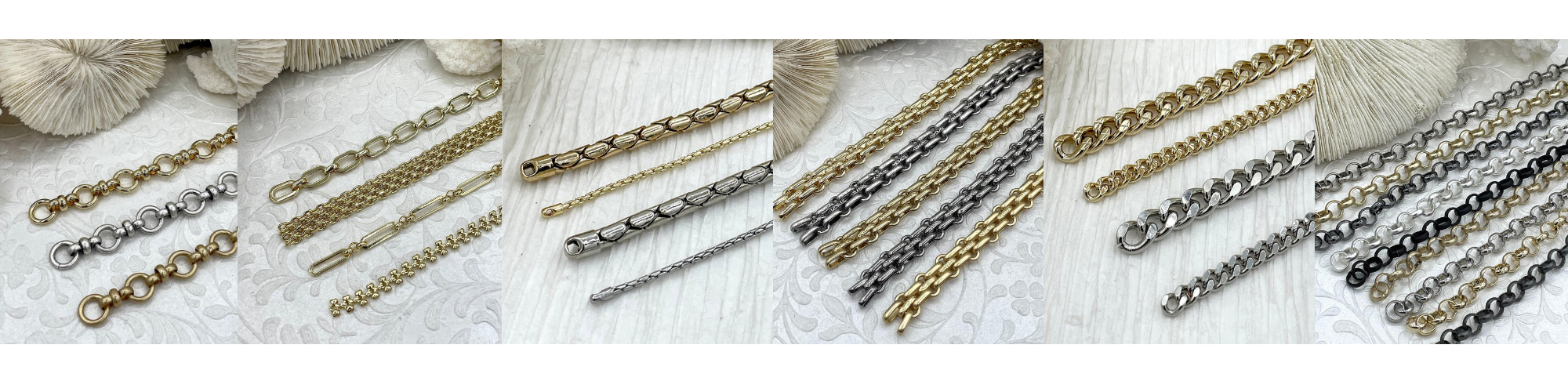
Cable chain is made from round or oval links connected at right angles. It is one of the most widely used chain styles because it is simple, balanced, and easy to combine with pendants, charms, extenders, and clasps.
Fine cable chain is ideal for delicate necklaces and lightweight pendants. Medium cable chain is useful for everyday necklaces, charm bracelets, and layered pieces. Larger cable links can support removable charms or become a visible design feature.
Curb Chain
Curb chain is made from links that are twisted or flattened so they lie smoothly against the body. It has a polished, substantial appearance and can range from fine and refined to bold and chunky.
A light curb chain works well with small pendants. Medium or heavy curb chain can support larger focal pieces and is also attractive when worn alone. Its flat profile makes it comfortable for necklaces and bracelets.
Curb chain lies flatter against the skin and offers a stronger visual presence.
Paperclip Chain
Paperclip chain features elongated links with open space between them. It is a popular choice for modern necklaces, charm holders, layered designs, and bold bracelets. The open links make it easy to attach removable charms, connectors, decorative clasps, and pendants.
Smaller paperclip links create a refined contemporary look. Oversized links make the chain itself the focal point. Paperclip chain pairs especially well with CZ pave charms, Brass charms, and decorative spring gate clasps.
Paperclip chain is ideal for contemporary charm necklaces and interchangeable designs.
Rosary Chain
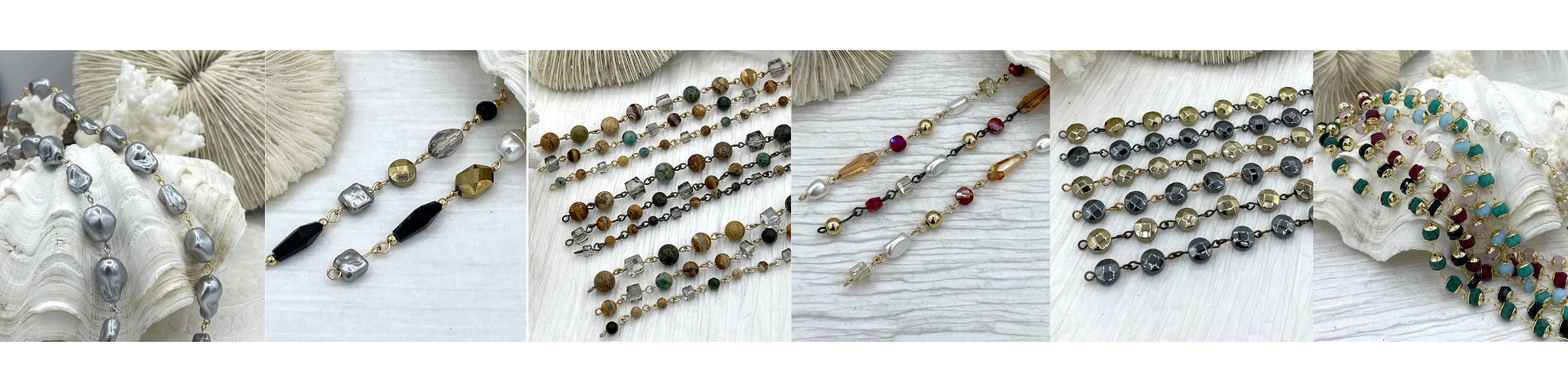
Rosary chain consists of beads, gemstones, crystals, or pearls linked together with wire. It adds color, spacing, movement, and texture without requiring the designer to create every wire-wrapped section individually.
Rosary Chains can be used for necklaces, bracelets, earrings, layered pieces, and rosary-inspired jewelry. Small beads create a delicate rhythm, while larger beads add greater visual weight. The wire color should coordinate with the clasp, jump rings, pendants, and other metal components.
Rosary chain adds ready-made color, texture, and movement to handmade jewelry.
Pearl Chain
Pearl chain combines linked chain construction with the elegance of pearls. It may feature freshwater pearls, glass pearls, or pearl-like beads connected by wire or small metal links.
Pearl Chains are excellent for bridal jewelry, romantic necklaces, layered pieces, vintage-inspired designs, and mixed-material creations. Irregular pearls give a natural handcrafted appearance, while uniform pearls feel more formal and polished.
Pearl chain brings softness and elegance to bridal, vintage, and layered jewelry.
Hand-Knotted Necklace Chains
Hand-knotted necklace chains use cord, thread, leather, or another flexible material to connect beads, pearls, stones, or decorative elements. Knotting creates spacing, texture, flexibility, and an artisanal appearance.
hand knotted necklace chains work beautifully with organic stones, pearls, coins, pendants, and mixed-metal components. They are especially suitable for bohemian, rustic, spiritual, and handcrafted styles.
Hand-knotting adds movement, texture, and a distinctive handcrafted character.
Compare Chain Styles Before You Start
Review several link shapes and finishes before selecting the foundation for your next necklace or bracelet.
Material affects color, weight, durability, care requirements, cost, and customer expectations. The best choice is the material that fits the design's intended use and price point.
Base Metal Chains
Base Metal Chains are practical for fashion jewelry, prototypes, trend-driven collections, and affordable handmade pieces. Base metals may include brass, copper, steel, iron, or mixed alloys with polished, plated, coated, or antique finishes.
They provide a wide selection of link shapes and colors at accessible prices. This makes them useful when experimenting with new designs or producing pieces that use a large amount of chain.
Base metal chains offer variety, flexibility, and accessible options for fashion jewelry.
Brass Chains
Brass Chains have a naturally warm golden color. They are popular in vintage, rustic, bohemian, equestrian, coin, and mixed-metal jewelry.
Raw brass may develop a patina over time. Some designers value that evolving finish because it adds character. Plated or coated brass may retain a brighter appearance for longer. Always provide appropriate care guidance to customers.
Brass chain pairs naturally with coins, warm gemstones, rustic charms, and antique finishes.
Plated Chains
Plated chains use a base metal covered with a decorative metal finish. They can provide the look of gold, silver, rhodium, gunmetal, or antique metal at a lower price than solid precious metal.
Plating durability depends on wear, moisture, chemicals, skin chemistry, and storage. Encourage customers to avoid perfume, lotions, swimming pools, and prolonged water exposure.
Stainless Steel and Precious Metals
Stainless steel is strong and resistant to tarnishing. Sterling silver and solid gold are chosen for fine jewelry, heirloom pieces, and higher price points. These materials may be appropriate when long-term wear and intrinsic metal value are priorities.
Selecting the Correct Chain Thickness
Thickness affects strength, comfort, and proportion. A chain that is too fine may look weak or fail under a heavy pendant. A chain that is too thick can overpower the focal component.
Link construction matters as much as width. A compact rope chain may feel stronger than an open decorative chain of a similar measurement. Examine the link shape, wire gauge, soldering, and flexibility.
Delicate Chains
Delicate chains suit small pendants, lightweight charms, minimalist necklaces, and subtle layering. Use small clasps and connectors so the findings do not overwhelm the chain.
Medium-Weight Chains
Medium chains are the most versatile choice for beginners. They support many pendants and charms while remaining comfortable and easy to work with.
Heavy Chains
Heavy chains are appropriate for statement necklaces, large pendants, chunky bracelets, and designs where the chain itself is a major feature. Pair them with strong clasps, spring gate clasps, and reinforced connectors.
How to Choose Chain Length
Chain length determines where a necklace sits on the body. Exact placement varies by body shape, neck size, pendant length, clothing, and personal preference.
14–16 inches: choker and close-to-the-neck designs.
18 inches: a classic everyday necklace length.
20–24 inches: longer pendant necklaces and relaxed styles.
28–36 inches: layering pieces and necklaces worn over clothing.
Include the pendant drop when evaluating the final length. A 20-inch chain with a three-inch pendant will sit much lower than a plain 20-inch chain.
Layered necklaces need enough length difference to prevent overlap. Use extenders when you want the customer to adjust the spacing.
Matching Chains with Pendants
A successful chain-and-pendant combination should have compatible scale, color, style, and visual weight. A decorative pendant may need a simple chain, while a minimal pendant can benefit from a more distinctive link pattern.
Small Pendants and Charms
Small CZ pave charms and Brass charms often look best on fine cable, curb, rosary, or delicate paperclip chain. Confirm that the chain and end components fit through the bail or attachment loop.
Medium Pendants
Medium Pendants pair well with cable, curb, paperclip, rosary, pearl, or hand-knotted chains. The chain should remain visible without competing with the focal piece.
Horse Charms and Pendants
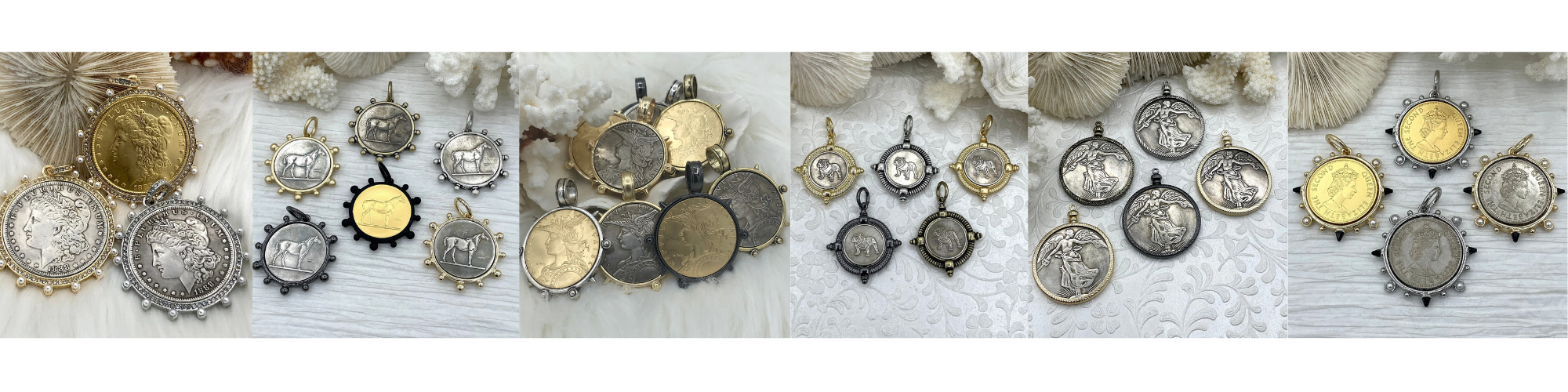
Horse charms and pendants often have a strong symbolic or sculptural presence. Pair small equestrian charms with medium cable or paperclip chain. Larger horse pendants may require heavier curb, brass, or hand-knotted necklace chains.
Coin Pendants
Coin Pendants work beautifully with brass, curb, paperclip, rosary, and hand-knotted chains. Consider the coin's diameter, weight, patina, and bail size. Vintage-style coins often pair naturally with warm brass and antique finishes.
Match the chain's scale and finish to the size, weight, and style of the pendant.
Choosing the Right Clasp
The closure should match the chain in strength and appearance. Clasps should be large enough to operate comfortably but not so large that they dominate the design.
spring gate clasps can be both functional and decorative. They work especially well with paperclip chains, charm holders, layered necklaces, and designs that allow customers to change pendants.
Clasps should coordinate with the chain's scale, finish, strength, and intended use.
Create a Complete Necklace Design
Select the chain first, then coordinate the pendant, charm, clasp, and connecting components.
Bracelets experience more movement and impact than many necklaces. They touch desks, clothing, bags, and other objects, so durability and secure closures are especially important.
Medium cable, curb, paperclip, and brass chains are reliable bracelet options. Rosary, pearl, and hand-knotted chains can also work, but inspect each connection carefully.
Measure the wrist and add enough ease for comfort. Chunkier chains need more room because the links occupy interior space. Choose a clasp that is easy to use with one hand.
Best Chains for Beginners
Beginners should start with chains that are easy to see, cut, hold, and connect. Very fine chains can be difficult to handle and repair.
Medium cable chain: versatile and easy to connect.
Small or medium paperclip chain: open links simplify charm attachment.
Medium curb chain: durable and visually balanced.
Rosary chain: adds beads without building every wrapped link.
Pearl chain: creates an elegant finished appearance quickly.
Hand-knotted chain: adds an artisanal look and pairs well with pendants.
Buy a small variety rather than many similar styles. Test them with different charms, pendants, clasps, and spring gate clasps to learn how scale and construction affect the finished piece.
A finished necklace should balance chain scale, pendant weight, color, and findings.
Common Mistakes to Avoid
Choosing by Appearance Alone
A beautiful chain is not automatically suitable for every project. Consider strength, flexibility, comfort, and attachment points.
Using Findings That Are Too Small
A strong chain can still fail if the clasp or connector is weak. Match every finding to the chain's scale and expected load.
Ignoring the Pendant Bail
Confirm that the chain or its end components can pass through the pendant bail before assembly.
Forgetting the Finished Drop
Include the pendant, connector, bail, and decorative drops when calculating the final necklace length.
Mixing Finishes Accidentally
Gold, brass, antique gold, silver, and gunmetal can differ significantly. Mixed metals can be beautiful, but repeat each finish so the contrast feels intentional.
Using Delicate Chain for Heavy Wear
Fine chain may not suit large coin pendants, active wear, or customers who prefer durable everyday pieces.
Not Testing the Finished Jewelry
Test the clasp, connections, movement, comfort, and balance before selling or gifting the piece.
Frequently Asked Questions
What is the most versatile jewelry chain?
Medium cable chain is one of the most versatile choices because it works with many pendants, charms, clasps, and extenders.
What chain is best for a pendant?
Small pendants often suit fine cable or curb chain. Medium pendants pair well with cable, paperclip, rosary, pearl, or brass chain. Heavy pendants need a stronger and more visually substantial chain.
What chain works best with coin pendants?
Coin pendants often pair well with brass, curb, paperclip, rosary, and hand-knotted necklace chains. Match the chain to the coin's diameter, weight, bail, and finish.
Are brass chains good for jewelry making?
Yes. Brass chains are ideal for vintage, rustic, bohemian, coin, equestrian, and mixed-metal designs. Raw brass may naturally develop a patina.
What is the difference between rosary chain and pearl chain?
Rosary chain can use many types of beads or stones connected by wire. Pearl chain specifically uses pearls or pearl-like beads.
Can hand-knotted necklace chains hold pendants?
Yes, provided the cord, knots, connectors, and clasp are strong enough for the pendant's weight. Reinforce the attachment area for heavier focal pieces.
What clasp should I use with paperclip chain?
Lobster clasps, toggles, and spring gate clasps all work well. A decorative spring gate clasp can also act as a charm holder.
How thick should a necklace chain be?
It should be thick enough to support the pendant and look proportionate without overpowering it. Link construction matters as much as measured width.
What chain length is best for everyday wear?
Eighteen inches is a popular everyday length, but the ideal size depends on neck size, body shape, pendant length, clothing, and preference.
Can necklace chain be used for bracelets?
Yes. Many chain styles work for both. Bracelet designs should use strong, secure closures because they experience more movement and impact.
How should jewelry chains be stored?
Store chains separately in a dry place. Close clasps before storage and keep delicate chains flat or hanging to reduce tangling.
Conclusion
Choosing the right jewelry chain becomes easier when you evaluate both design and function. Start with the purpose of the piece, then compare chain style, material, thickness, length, pendant weight, and closure.
Cable chain offers dependable versatility. Curb chain adds polished strength. Paperclip chain creates a modern open-link look. Rosary and pearl chains add color, movement, and texture. Brass chains create warmth and vintage character. Hand-knotted necklace chains offer an artisanal foundation for pendants and beads.
The chain, clasp, spring gate clasp, pendant, and charms should work together as one balanced system. Start with a few versatile styles, test them with different components, and pay close attention to scale and connection strength.
Find the Right Chain for Your Next Design
Explore BlingByA chains, charms, pendants, and clasps to create jewelry with the right balance of beauty, strength, and style.